Introduction
Powassan Virus Disease – Picture this: you’re hiking through a lush forest or enjoying a picnic in a grassy park, unaware that a tiny tick could be carrying a rare but serious disease. Powassan virus disease, spread by infected ticks, is a health concern that’s been making headlines in recent years. Though it’s uncommon, its potential to cause severe illness makes it worth understanding, especially if you spend time outdoors in certain parts of North America. In this article, we’ll break down what Powassan virus disease is, how it spreads, its symptoms, treatment options, and how you can protect yourself—all in plain language to help you stay informed and safe.
What Is Powassan Virus Disease?
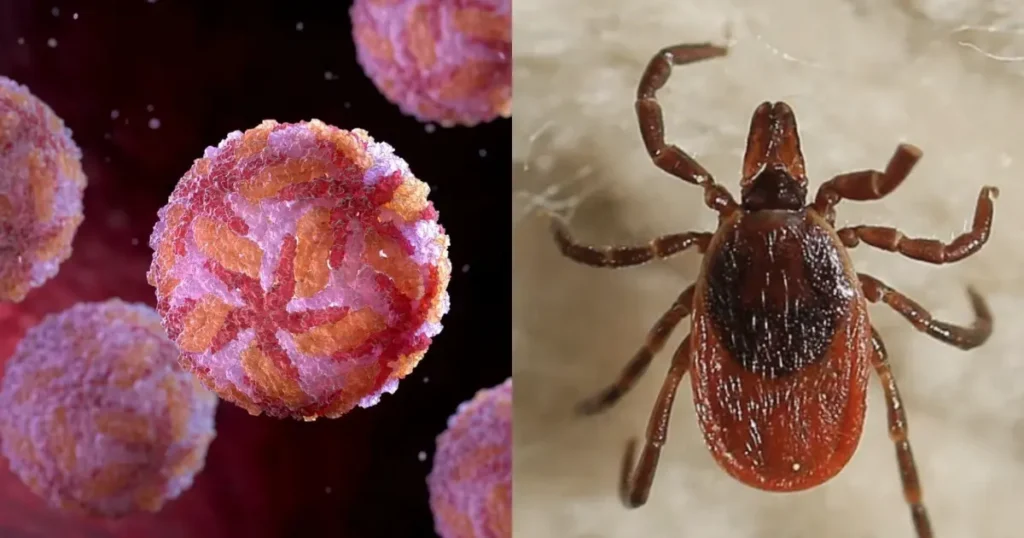
Powassan virus disease is a rare illness caused by a virus in the Flavivirus family, which is spread to humans through the bite of an infected tick. Named after Powassan, Ontario, where it was first identified in 1958 after a young boy died from it, this virus is the only tick-borne flavivirus known to be endemic in North America. It’s primarily found in the northeastern United States, the Great Lakes region, and parts of Canada and Russia. The virus comes in two types, or lineages: Lineage 1, carried by ticks like the woodchuck or squirrel tick, and Lineage 2, also called deer tick virus, carried by the black-legged tick (the same tick that spreads Lyme disease).
Unlike more common tick-borne diseases like Lyme, Powassan is concerning because it can be transmitted in as little as 15 minutes after a tick bites, much faster than the 36–48 hours typically needed for Lyme disease. While many people infected with Powassan virus may not even feel sick, those who do can experience serious symptoms, including brain inflammation (encephalitis) or inflammation of the membranes around the brain and spinal cord (meningitis). About 10–15% of severe cases are fatal, and roughly half of survivors face long-term neurological issues like headaches, memory problems, or muscle weakness.
How Does It Spread?
Powassan virus spreads through the bite of infected ticks, primarily the black-legged tick (Ixodes scapularis), which is also known as the deer tick. Other ticks, like the woodchuck tick (Ixodes cookei) and squirrel tick (Ixodes marxi), can carry it too, but they’re less likely to bite humans. These ticks pick up the virus by feeding on small mammals like mice or squirrels, which act as reservoirs. When an infected tick bites a human, the virus can be transmitted quickly through the tick’s saliva.
Humans are considered “dead-end” hosts, meaning they can’t pass the virus to another tick or person through casual contact. However, there’s a rare possibility of transmission through blood transfusions from an infected person, so those who’ve had Powassan are advised not to donate blood for at least four months. The virus is most active in late spring, early summer, and mid-fall, when ticks are out and about in wooded or grassy areas.
Recent data shows Powassan cases are on the rise. For example, the U.S. Centers for Disease Control and Prevention (CDC) reported 291 cases in the U.S. from 2004 to 2022, with states like Minnesota, Wisconsin, New York, and Massachusetts seeing the most cases. In 2022, Minnesota reported eight cases, with one death, and in 2023, a 58-year-old man in Maine died from the disease. This increase might be due to better surveillance, more ticks in populated areas, or the spread of the black-legged tick, which is a more common human-biter than other tick species.
Symptoms to Watch For
Powassan virus disease can range from mild to life-threatening. Many people who get infected don’t notice any symptoms, but for those who do, symptoms typically appear 1 to 5 weeks after a tick bite. Early signs include:
- Fever
- Headache
- Vomiting
- Weakness
- Nausea
In severe cases, the disease can progress to neurological problems, including:
- Confusion or disorientation
- Difficulty speaking or loss of coordination
- Seizures
- Encephalitis (brain inflammation) or meningitis (inflammation of the brain and spinal cord membranes)
- Muscle weakness or paralysis
These severe symptoms often require hospitalization. Tragically, about 1 in 10 people with severe Powassan disease don’t survive, and survivors may deal with long-term issues like recurring headaches, memory problems, or even partial paralysis. For example, in 2021, artist MaryAnn Harris contracted Powassan in Canada and was paralyzed, spending much of her remaining life in care facilities before passing away in 2024.
Diagnosis and Treatment
Diagnosing Powassan virus disease can be tricky because it’s rare and its symptoms mimic other conditions, like West Nile virus or herpes simplex virus. Doctors usually start by asking about recent tick exposure, especially in high-risk areas like the Northeast or Great Lakes. They may order blood or spinal fluid tests to look for Powassan-specific antibodies, which the immune system produces to fight the virus. These tests are typically done in specialized labs, as only a few facilities, like the CDC’s Arbovirus Diagnostic Laboratory, offer them.
Unfortunately, there’s no specific medicine or vaccine for Powassan virus. Treatment focuses on managing symptoms. For mild cases, rest and fluids may be enough. Severe cases often require hospitalization, where patients might receive:
- Medications to reduce brain swelling
- Respiratory support
- Intravenous fluids to prevent dehydration
Because there’s no cure, prevention is key, which we’ll cover in a moment.
Why Is Powassan Becoming More Common?
You might be wondering why we’re hearing more about Powassan now. Experts point to a few reasons. First, the black-legged tick, which carries the more transmissible Lineage 2 (deer tick virus), has been spreading to new areas, likely due to climate change and habitat changes. These ticks are more likely to bite humans than the woodchuck or squirrel ticks that carry Lineage 1. Second, better testing and awareness mean more cases are being caught and reported. From 2001 to 2010, the U.S. saw just 33 confirmed cases, but from 2008 to 2017, that number jumped to 125, with states like Minnesota and Massachusetts reporting dozens of cases.
Surveillance data also suggests that Powassan may be underdiagnosed. A 2022 study in Sussex County, New Jersey, found that 1% of the general population had Powassan antibodies, indicating past exposure, even if they didn’t get sick. This suggests the virus might be more widespread than case numbers show, especially in areas with lots of ticks.
How to Protect Yourself
The good news? You can take steps to lower your risk of getting Powassan virus disease. Since it’s spread by ticks, prevention is all about avoiding tick bites, especially in wooded or grassy areas during warmer months. Here are some practical tips:
- Use Insect Repellent: Apply EPA-approved repellents containing DEET or permethrin to skin or clothing. Follow the label instructions, especially for kids, and avoid applying near the eyes, nose, or mouth.
- Wear Protective Clothing: Long sleeves, pants tucked into socks, and light-colored clothing (to spot ticks easily) are your friends in tick-prone areas.
- Check for Ticks: After spending time outdoors, check yourself, your kids, and your pets for ticks, especially in warm, moist spots like armpits, the scalp, and behind the knees. Ticks can be as small as a poppy seed, so look closely.
- Remove Ticks Properly: If you find a tick, use fine-tipped tweezers to grasp it close to the skin and pull straight out without twisting. Clean the area with soap and water, and watch for symptoms over the next few weeks.
- Manage Your Yard: Keep grass short, clear away leaf litter, and create a barrier of wood chips or gravel between your lawn and wooded areas to reduce tick habitats.
If you develop symptoms like fever or headache after a tick bite, see a doctor right away and mention your tick exposure. Early reporting can help with diagnosis and monitoring.
Final Thoughts
Powassan virus disease may be rare, but its potential for serious harm makes it something to take seriously, especially if you live or spend time in the Northeast, Great Lakes, or parts of Canada. While the idea of a tick bite leading to brain inflammation sounds scary, understanding the risks and taking simple precautions can go a long way. By staying vigilant about ticks and acting quickly if symptoms appear, you can enjoy the outdoors with peace of mind. As researchers continue to study Powassan and its spread, staying informed is your best defense against this emerging health threat.