When someone says “chia”, what is the first thing that comes to your mind? For millions, the answer is “Chia Pet!” But today, chia has gained fame as a powerful superfood for people — especially as a healthy base for puddings and smoothies.
But what about chia seeds for dogs? Let’s take a look at their health benefits for your furry friend … and how to safely give them.
What Are Chia Seeds?
Chia, or Salvia hispanica, is often called the “forgotten crop.” First domesticated around 2600 BC, chia is a flowering plant native to southern Mexico and Central America. It was cultivated by the Mayans and Aztecs, who made it a key part of their diet — and even used it as a form of currency.
Legend has it that Aztec warriors and runners could survive on just a tablespoon of chia seeds a day, which gave them stamina and energy for long journeys.
Due to its nutritional profile, which imparts strength and endurance, chia was historically perceived as possessing magical qualities, earning it status as a sacred seed employed in religious rituals and divine offerings.
Belonging to the mint family, chia has two main varieties: white and black. Chia oil is also used in many ointments thanks to its soothing properties. Each seed packs a punch — about 19–23% protein (naturally gluten-free), 34% oil, and 25% fiber.
Are Chia Seeds for Dogs is a Good Recommendation?
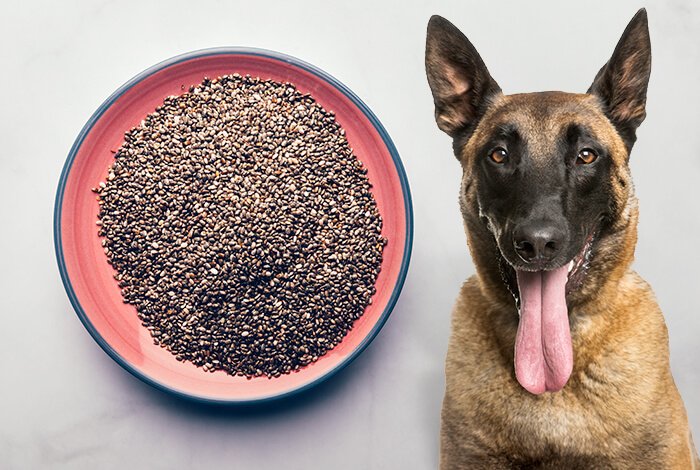
Yes — in moderation, chia seeds are good for dogs. They provide an excellent source of B vitamins and are abundant in omega fatty acids, antioxidants, dietary fiber, and key minerals including calcium, magnesium, and phosphorus.
Let’s break down some of the biggest benefits for dogs.
Omega Fatty Acids
Dogs need omega-3 fatty acids to balance out omega-6 fatty acids (which are already high in most commercial dog diets). Omega-3s support:
- Immune system
- Skin and coat health
- Joint function
- Brain development and maintenance
- Eye health
- Overall growth
They also help reduce inflammation in the body. Since chronic inflammation is the root of many diseases, it’s important to give your dog anti-inflammatory foods.
Chia seeds are a well-known source of omega-3s — said to have three times more omega-3 fatty acids than salmon. You need only two tablespoons of chia seeds to consume a 3:1 ratio of omega-3 to omega-6 fatty acids.
But there’s a catch: the omega-3s in chia are mostly in the form of alpha-linolenic acid (ALA), which isn’t the most effective form for dogs.
Alpha-Linolenic Acid (ALA)
ALA is an essential fatty acid, meaning your dog cannot produce it and must get it from food. Chia seeds are a great source of ALA (also found in flaxseeds, leafy plants, and nuts).
However, dogs don’t easily convert ALA into the longer-chain fatty acids their bodies really need — EPA and DHA. ALA has to go through multiple conversion steps (ALA → SDA → ETA → EPA), which is an inefficient process.
That means dogs don’t get enough usable omega-3s from chia seeds alone. So, even though chia seeds are healthy, they shouldn’t replace other sources of omega-3 in your dog’s diet. For proper EPA and DHA, look for alternatives like green-lipped mussel oil or certain fish sources.
Fiber
Chia seeds are loaded with fiber — about 10 grams per ounce. Most of it is soluble fiber, which absorbs water and turns gel-like.
For dogs, this fiber can:
- Support digestion and regular bowel movements
- Help with constipation
- Absorb excess water during diarrhea
- Support healthy gut bacteria by producing short-chain fatty acids
- Regulate blood sugar by slowing down carbohydrate-to-sugar conversion
- Help dogs feel full, which may prevent overeating and obesity
So chia is a natural way to support both digestion and weight management.
Antioxidants
Chia seeds are also rich in antioxidants, which protect your dog’s body against free radicals and oxidative stress.
While free radicals are a normal part of metabolism, controlling them is essential to prevent the cellular damage that accelerates aging and disease. Antioxidants help neutralize them.
Chia contains powerful antioxidants like quercetin, kaempferol, chlorogenic acid, caffeic acid, and myricetin. These compounds support the heart and liver and may even have anti-cancer properties.
Minerals
Chia is a powerhouse of minerals:
- More calcium than whole milk
- More iron than raw spinach
- More magnesium than broccoli
It’s also rich in phosphorus, potassium, copper, zinc, and other trace minerals that support bone, blood, and overall health.
One Argentinian study even found that long-term chia feeding improved bone density, liver function, and gut health in animals.
How to Give Chia Seeds to Your Dog
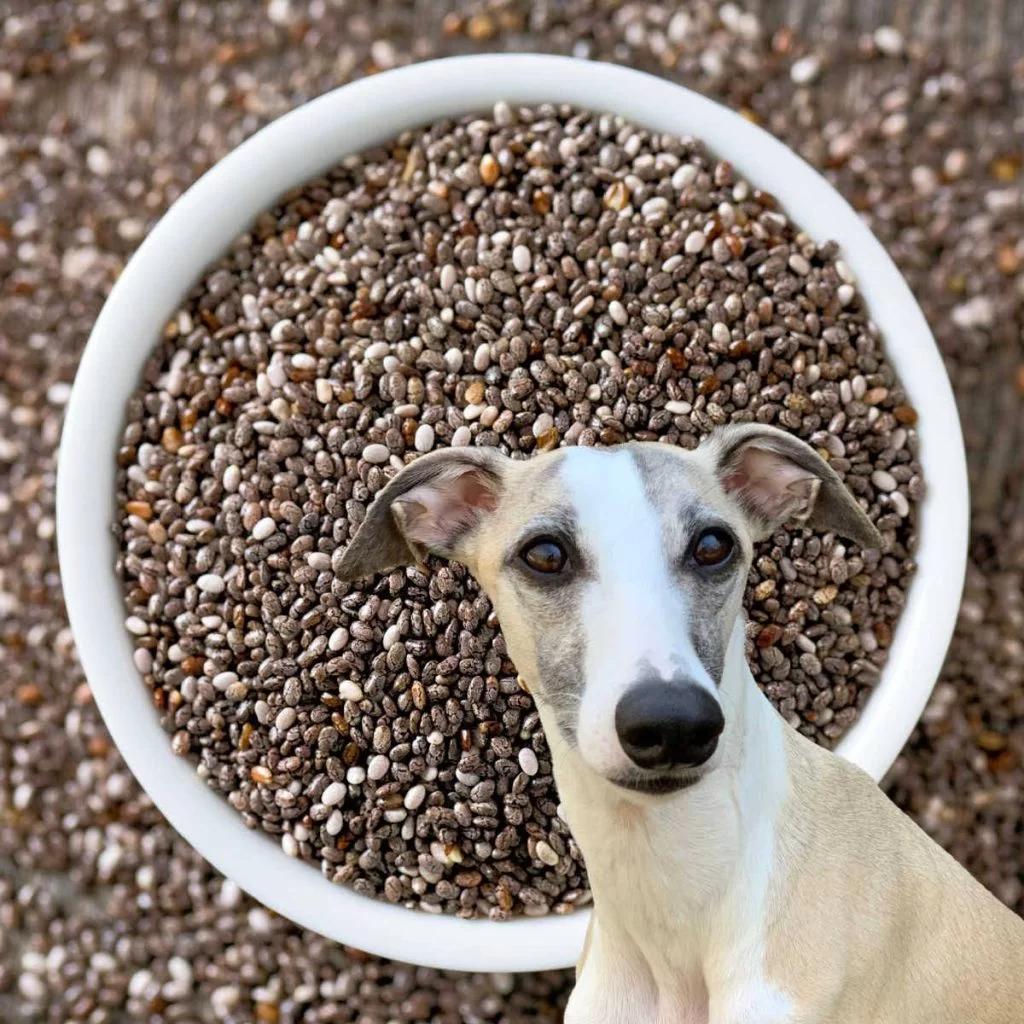
Always offer your dog abundant fresh water with chia seeds, as their absorbent nature requires extra hydration.
Here are some tips:
- Choose organic, milled chia seeds whenever possible.
- Chia stores well and doesn’t spoil easily.
- Picky dogs often eat chia without issue, as it has little taste or smell.
Dosage:
Give ¼ teaspoon per 10 pounds of your dog’s body weight daily.
You can:
- Sprinkle dry seeds on their food
- Soak the seeds in water to make a pudding-like mix
- Add to homemade treats or mix with pumpkin/yogurt for a snack
Final Word
The fiber, antioxidants, and essential minerals in chia seeds can offer a valuable nutritional supplement to your dog’s diet. But don’t rely on them as the only source of omega-3 fatty acids — combine them with other healthy sources of EPA and DHA.
With the right balance, chia seeds can help support your dog’s digestion, weight, and overall wellness … proving that sometimes the tiniest foods pack the biggest benefits.